Evaluating Elegant Easter Egg on a Pedestal Clipart for Professional Design Projects
In the realm of seasonal graphic design, the choice of assets can significantly influence the perceived quality and tone of a final project. When designers seek to elevate holiday content beyond standard cartoons or rustic themes, they often turn to Elegant Easter Egg on a Pedestal Clipart. This specific category of digital art moves away from playful chaos, offering instead a composition defined by balance, luxury, and refined aesthetics. For professionals creating high-end greeting cards, sophisticated social media campaigns, or premium print materials, understanding the nuances of this style is essential for making informed resource decisions.
Defining the Aesthetic: What Makes This Style Distinct?
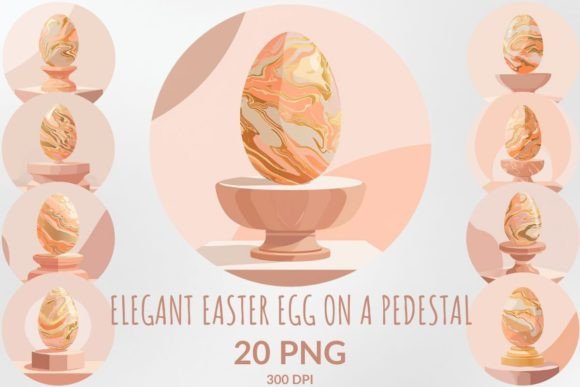
Elegant Easter Egg on a Pedestal Clipart is characterized by a deliberate departure from traditional, colorful, and often cluttered Easter imagery. Instead of depicting eggs in grassy fields or nestled in baskets, these designs isolate a single egg on a structural base—a pedestal. This compositional choice immediately shifts the focus to the object itself, treating it as an artifact of value rather than a simple holiday symbol.
The visual language typically employs a flat design approach, which simplifies shapes while maintaining clarity. However, "flat" does not imply a lack of depth or interest. In this context, the design relies on sophisticated color palettes, often featuring muted pastels paired with metallic accents like gold swirls. The inclusion of a spotlight effect against a soft, neutral background further enhances the sense of prestige. This combination creates a serene atmosphere that resonates with audiences seeking a more mature interpretation of spring celebrations.
What distinguishes this clipart from generic alternatives is the emphasis on negative space and framing. By placing the egg on a pedestal, the design inherently suggests importance and ceremony. This makes the asset particularly effective for projects where the message needs to convey exclusivity or high standards, such as luxury brand announcements or formal event invitations.
Comparing Styles: Flat Design vs. Traditional Illustrations
When selecting resources for a project, it is crucial to compare Elegant Easter Egg on a Pedestal Clipart against other available styles. The most common alternative is the traditional cartoon illustration. These images often feature bright primary colors, anthropomorphic characters, and complex backgrounds. While excellent for children's books or party decorations, they can appear juvenile when used in corporate communications or upscale marketing materials.
Another common alternative is the photorealistic style. High-resolution photographs of decorated eggs offer texture and realism but can be difficult to integrate into graphic layouts without extensive editing. They often clash with vector-based typography and modern UI elements. In contrast, the flat design aesthetic of the pedestal clipart ensures seamless integration. Because the shadows and highlights are stylized rather than photographic, these PNG files blend naturally with digital interfaces, web banners, and print layouts that utilize clean lines and modern typography.
There is also the option of hand-drawn watercolor styles. While watercolors offer a soft, organic feel, they can sometimes lack the crispness required for large-format printing or small-scale digital icons. The Elegant Easter Egg on a Pedestal style bridges this gap by offering the softness of pastel tones with the sharp, scalable edges of vector-inspired flat design. This hybrid approach provides versatility that purely organic or purely geometric styles may lack.
Key Differences at a Glance
- Complexity: Traditional illustrations often include multiple elements (bunnies, chicks, grass), whereas pedestal clipart focuses on a singular, isolated subject.
- Color Palette: Standard options favor neon and primary hues; elegant versions utilize muted tones, metallics, and monochromatic schemes.
- Background Integration: Photorealistic images require masking; flat design PNGs with transparent backgrounds drop directly into any layout.
- Tone: The pedestal style conveys sophistication and calm, while traditional styles convey energy and playfulness.
Practical Applications and Best-Fit Scenarios
Understanding where Elegant Easter Egg on a Pedestal Clipart excels helps designers allocate their resources effectively. This style is particularly well-suited for applications requiring a sense of occasion and refinement. For instance, in the creation of digital greeting cards, the spotlight effect and gold detailing can make a simple "Happy Easter" message feel like a curated gift.
Event planning and invitation design represent another strong use case. Whether for a spring gala, a brunch event, or a seasonal product launch, the imagery sets a tone of anticipation and class. The pedestal acts as a visual anchor, drawing the eye to the central theme without overwhelming the text. Similarly, in planner graphics and journaling, these assets serve as decorative headers or section dividers that add a touch of luxury without distracting from the functional layout.
Digital marketing campaigns targeting adult demographics also benefit from this aesthetic. Social media posts for lifestyle brands, interior design firms, or fashion retailers often struggle to find seasonal imagery that aligns with their brand identity. Using a chaotic or childish Easter image can dilute brand equity. Conversely, the serene and prestigious vibe of the pedestal clipart maintains brand consistency while acknowledging the season.
Tradeoffs and Limitations to Consider
While the benefits are clear, there are tradeoffs associated with choosing Elegant Easter Egg on a Pedestal Clipart. The primary limitation is the target audience. If the goal is to appeal to young children or create a festive, high-energy atmosphere for a community fair, this style may feel too subdued or distant. The muted colors and formal composition might not generate the immediate excitement required for certain types of promotions.
Additionally, the reliance on a specific aesthetic—gold, pastel, and pedestal—means the asset may not fit every design system. Brands with strict guidelines regarding bold colors, industrial textures, or minimalist black-and-white themes might find these assets incompatible. It requires a careful evaluation of the existing brand palette to ensure the gold accents and soft backgrounds do not clash with established visual identities.
Furthermore, the "luxury" aspect implies a level of formality that might be inappropriate for casual blogs or informal newsletters. In these contexts, a simpler, flatter icon without the pedestal or spotlight might be more effective. The decision ultimately hinges on the desired emotional response: does the project need to inspire awe and appreciation, or joy and fun?
Decision Factors for Selecting the Right Resource
Before integrating Elegant Easter Egg on a Pedestal Clipart into a workflow, designers should consider several key factors. First, evaluate the resolution requirements. High-quality PNG files are essential for print applications like business cards or brochures. Ensure the source offers sufficient DPI to prevent pixelation when scaled up. Second, consider the format compatibility. While PNGs are versatile, some print workflows may prefer vector formats (SVG or EPS) for infinite scalability. Checking if the collection includes vector options can save time during the production phase.
Third, assess the licensing terms. For commercial projects, especially those involving sublimation or merchandise, it is vital to confirm that the license covers the intended use. Some collections may restrict usage to personal projects only, while others offer broad commercial rights. Understanding these legal boundaries prevents future complications.
Finally, think about the broader narrative of the project. Does the image support the story you are telling? If the campaign is about renewal, simplicity, and elegance, the pedestal clipart is a strong candidate. If the campaign is about abundance, family gatherings, and tradition, a more inclusive and bustling scene might be more appropriate.
Conclusion: Making an Informed Choice
Elegant Easter Egg on a Pedestal Clipart offers a unique solution for designers navigating the intersection of seasonal relevance and professional sophistication. By prioritizing composition, color theory, and a refined aesthetic, these assets provide a distinct alternative to the saturated market of traditional Easter graphics. They are not merely decorative elements but strategic tools for shaping brand perception and audience engagement.
However, they are not a universal fix. Their effectiveness depends entirely on the context of the project and the expectations of the target audience. By weighing the strengths of their polished look against the limitations of their formal tone, designers can determine if this style aligns with their specific goals. Whether for high-end print, digital marketing, or personal creative endeavors, a thoughtful evaluation ensures that the chosen imagery enhances the overall vision rather than detracting from it.