Forest Animals: Integrating Hand-Painted Watercolor Elements into Creative Workflows
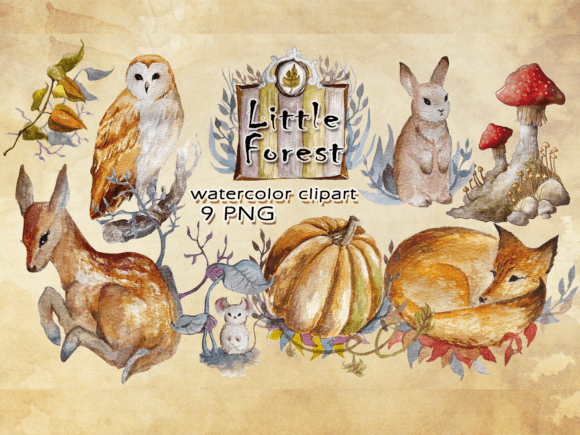
In the landscape of digital design and content creation, the selection of visual assets is rarely just an aesthetic choice; it is a strategic decision that impacts brand identity, audience engagement, and production efficiency. Forest Animals, specifically those rendered in a hand-painted watercolor style, represent a versatile category of resources that bridge the gap between organic artistry and digital precision. For professionals ranging from graphic designers and marketers to educators and small business owners, understanding how to integrate these elements into a broader workflow is essential for maximizing their utility. This article explores the practical application of high-resolution watercolor clipart featuring creatures like deer, owls, foxes, and rabbits, alongside botanical elements such as fly agaric mushrooms and pumpkins.
The Role of Visual Assets in Project Planning
Before a single pixel is placed on a canvas, successful projects begin with a clear vision of the desired outcome. When planning a creative campaign, whether it is a seasonal marketing push, a wedding invitation suite, or an educational blog series, the mood board phase is critical. Forest Animals clipart serves as a foundational pillar during this pre-production stage. The specific characteristics of watercolor—its soft edges, translucent layers, and natural color bleeding—evoke feelings of nostalgia, warmth, and nature. These emotional cues are vital when targeting audiences who value authenticity and artisanal quality.
Consider the workflow of a stationery designer preparing for the autumn season. Instead of starting from scratch with a blank page, the process begins by curating a palette of assets that align with the seasonal theme. A set containing a mouse under a leaf, a pumpkin, and a bush provides immediate context. By selecting these elements early, the designer establishes a cohesive visual language before moving to layout and typography. This approach streamlines the decision-making process, reducing the time spent searching for disparate images that may not match in style or resolution. The ability to visualize the final product using high-quality mockups allows for faster iteration and more confident execution.
Technical Specifications and Compatibility
A crucial aspect of integrating digital assets into professional workflows is ensuring technical compatibility. The value of a Forest Animals collection lies not only in its artistic merit but also in its file specifications. High-resolution PNG files with transparent backgrounds are the industry standard for overlaying graphics onto various media. A pack offering approximately 3000 x 3000 pixels at 300 DPI ensures that the images remain crisp and sharp, whether they are printed on large format posters or scaled down for social media icons.
For print-on-demand businesses and scrapbookers, the distinction between RGB and CMYK color modes is significant. While most digital downloads come in RGB for screen display, the high bit-depth and clarity of these watercolor elements allow for accurate color conversion during the printing process. The inclusion of separate files for each element—such as the owl, the deer, or the frame—grants creators the flexibility to manipulate individual components without affecting the rest of the composition. This modularity is essential for complex designs where layering and depth are required. It allows for non-destructive editing, meaning the original asset remains untouched while adjustments are made to opacity, blending modes, or positioning within software like Adobe Photoshop, Illustrator, or Canva.
Implementation Strategies Across Different Industries
The versatility of Forest Animals watercolor clipart extends across multiple sectors, each with unique implementation requirements. In the realm of marketing and branding, these assets can be used to create distinctive logos, social media headers, and email newsletter graphics. A boutique eco-friendly brand might use the fly agaric mushroom and the fox to symbolize their connection to nature, creating a visual identity that resonates with environmentally conscious consumers. The organic texture of watercolor helps brands stand out against the stark, vector-heavy aesthetics that dominate many digital spaces.
Education and Publishing offer another rich field for application. Teachers and curriculum developers often need engaging visuals to capture the attention of students. A worksheet about forest ecosystems becomes significantly more engaging when illustrated with a realistic yet charming rabbit or a deer. Similarly, authors of children's books or bloggers focusing on lifestyle and wellness can use these images to break up text and illustrate concepts. The "mouse under a leaf" motif, for instance, can serve as a recurring character or a thematic anchor in a series of articles about hidden details in nature.
For event planners and stationery designers, the potential is equally vast. Wedding invitations, baby shower announcements, and birthday cards often require a personalized touch. The inclusion of frames within the clipart set simplifies the layout process, providing a ready-made structure for text placement. Designers can overlay the watercolor elements onto textured paper backgrounds to enhance the tactile feel of digital proofs, ensuring that the final printed product meets client expectations for elegance and charm.
Workflow Optimization and Asset Management
Efficiency in creative work is often determined by how well assets are organized and managed. Receiving a digital download of nine distinct elements requires a systematic approach to storage and retrieval. Best practices suggest organizing these files into clearly labeled folders based on project type, season, or theme. For example, a folder named "Autumn_Forest_Assets" could contain the pumpkin, bush, and fox, while a separate folder might house the owl and deer for general woodland themes.
This organizational discipline prevents version control issues and ensures that the highest quality files are always accessible. Furthermore, maintaining a library of these reusable assets accelerates future projects. Once a designer has established a workflow for incorporating the watercolor textures into their templates, subsequent tasks become routine rather than exploratory. This consistency is key for freelancers and agencies managing multiple clients simultaneously. By having a go-to set of Forest Animals clipart, professionals can maintain a consistent visual style across different deliverables without compromising on quality or spending excessive time on asset sourcing.
Quality Control and Long-Term Usability
When investing in digital resources, long-term usability is a primary concern. Unlike low-resolution stock photos that degrade upon resizing, high-DPI watercolor illustrations retain their integrity over time. This longevity makes them a cost-effective solution for businesses looking to build a sustainable asset library. However, quality control involves more than just checking pixel dimensions. It requires verifying that the color profiles are accurate and that the transparency masks are clean, free from jagged edges or unwanted white borders.
The hand-painted nature of these elements introduces a level of uniqueness that vector graphics often lack. Each brushstroke adds character, making the designs feel bespoke rather than generic. This human touch is increasingly valuable in an era of AI-generated imagery, where content can sometimes feel sterile or repetitive. By choosing authentic, artist-created watercolor clipart, creators signal a commitment to quality and craftsmanship. This attention to detail enhances the perceived value of the final product, whether it is a physical sticker, a greeting card, or a digital presentation.
Practical Execution Tips for Creators
To maximize the impact of Forest Animals in your own projects, consider the following practical tips:
- Layering for Depth: Utilize the separate PNG files to create depth. Place larger elements like the bush or frame in the background and smaller details like the mouse or fly agaric in the foreground to create a sense of three-dimensional space.
- Color Harmonization: While the watercolor elements have their own palette, adjust their saturation or hue slightly to match your brand colors. Most design software allows for non-destructive color adjustments that preserve the watercolor texture.
- Contextual Placement: Think about the narrative you want to tell. A pumpkin and a fox suggest autumn harvests, while a deer and a mouse under a leaf evoke spring or summer tranquility. Align the imagery with the seasonal timing of your project.
- Cross-Platform Consistency: Use the same set of assets across different mediums. If you use the owl logo on your website, incorporate the same character into your packaging or social media banners to reinforce brand recognition.
Ultimately, the integration of Forest Animals watercolor clipart into your creative process is about more than just decoration. It is a strategic move to enhance storytelling, improve visual hierarchy, and streamline production. By understanding the technical capabilities and artistic potential of these assets, professionals can execute projects with greater confidence and efficiency. Whether you are designing a simple greeting card or a comprehensive brand identity, these hand-painted elements provide the perfect blend of charm and functionality to bring your vision to life.