Teddy Bear Clipart, Birthday, Watercolor: A Practical Guide to Selection and Use
In the realm of digital design and creative crafting, the choice of visual assets can define the tone and success of a project. Teddy Bear Clipart, Birthday, Watercolor represents a specific niche that blends nostalgic charm with artistic fluidity. For adults aged 20 to 50 who are managing personal projects, small businesses, or content creation workflows, understanding the distinct characteristics of this style is essential. This format offers a soft, hand-drawn aesthetic that contrasts sharply with rigid vector graphics or hyper-realistic photography. It is particularly effective for evoking warmth, celebration, and whimsy in applications ranging from digital scrapbooking to web design.
When evaluating resources for a birthday-themed project, one must consider not just the subject matter but the medium. The watercolor technique introduces texture, color bleeding, and organic edges that mimic traditional art supplies. Unlike standard clip art, which often relies on solid colors and sharp outlines, Teddy Bear Clipart, Birthday, Watercolor provides depth through translucent layers and subtle gradients. This distinction is critical when the goal is to create an emotional connection with the audience or to add a tactile feel to a digital interface.
Distinguishing Features of the Watercolor Aesthetic
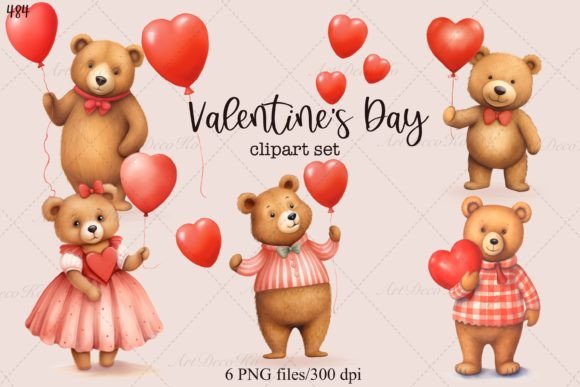
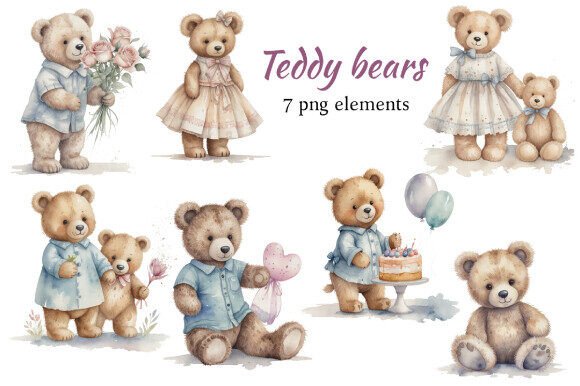
The primary differentiator of Teddy Bear Clipart, Birthday, Watercolor lies in its texture and imperfection. In graphic design, perfection is often the goal; however, in celebratory and personal contexts, slight irregularities convey authenticity. A high-resolution set typically includes elements like whimsical teddy bears, vibrant flowers, decadent cakes, and festive balloons. These components are rendered to look as if they were painted by hand, capturing the spontaneity of a brushstroke.
Technical specifications play a significant role in the utility of these assets. A robust collection usually offers files at approximately 3000 x 3000 pixels. This resolution ensures that the images remain crisp when printed on large formats, such as banners or tote bags, without pixelation. Furthermore, the use of PNG format with transparent backgrounds allows designers to layer these elements seamlessly over various textures or photographs. This flexibility is a major advantage over JPEGs, which often include unwanted white borders that require manual removal.
Another defining characteristic is the color palette. Watercolor styles naturally favor soft pastels mixed with saturated accents. For a birthday theme, this means the Teddy Bear Clipart might feature gentle browns and creams, while the accompanying balloons and flowers introduce pops of vibrant pink, blue, or yellow. This balance prevents the design from becoming visually overwhelming, maintaining a sophisticated yet playful appearance suitable for adult-oriented celebrations as well as children's parties.
Comparing Formats: Watercolor vs. Vector and Photorealism
When selecting assets for a project, it is necessary to compare Teddy Bear Clipart, Birthday, Watercolor against other dominant styles. The most common alternative is vector-based clip art. Vector graphics are defined by mathematical paths, allowing them to be scaled infinitely without quality loss. While vectors offer precision and clean lines, they often lack the organic texture that defines the watercolor look. If a project requires a modern, minimalist, or corporate feel, vectors may be the superior choice. However, for themes requiring warmth, nostalgia, or a "handmade" sentiment, the rigidity of vectors can feel out of place.
Photorealistic imagery presents another alternative. Using actual photos of teddy bears or cakes can ground a design in reality, but it often limits creative freedom. Photos are difficult to manipulate into cohesive compositions without advanced editing skills. In contrast, Watercolor Clip Art abstracts the subject, allowing it to blend more easily with other design elements like typography and patterns. It acts as a stylistic bridge between illustration and photography, offering the recognizability of a photo with the malleability of an illustration.
There is also the consideration of file weight and performance. High-resolution raster images, such as those found in a comprehensive watercolor set, can be larger in file size compared to simple vectors. For web design, this necessitates optimization to ensure fast loading times. Designers must weigh the visual richness of the watercolor texture against the technical constraints of their platform. In many cases, the trade-off is worth it for the aesthetic uplift, provided the images are compressed appropriately for screen display.
Evaluating Use Cases and Application Scenarios
The versatility of Teddy Bear Clipart, Birthday, Watercolor makes it suitable for a wide array of applications, but it excels in specific scenarios. One of the most popular uses is in digital and physical scrapbooking. The soft edges of watercolor elements allow them to sit comfortably atop journaling cards and photographs without creating harsh visual barriers. When creating planner stickers or dividers, these assets add a personalized touch that mass-produced stationery often lacks.
For card-making and decoupage, the high resolution of these files is a decisive factor. Printing on paper, cardstock, or even fabric requires sufficient detail to prevent blurriness. A set containing 12 distinct elements—such as bears, cakes, flowers, and balloons—provides enough variety to create multiple unique designs without repetition. This is particularly useful for event planners or small business owners producing invitations for multiple clients.
In the context of web design and blogging, these assets serve as effective visual breaks. A blog post about birthday party ideas or parenting tips can benefit significantly from the inclusion of whimsical illustrations. They soften the reading experience and make the content feel more approachable. However, caution is advised regarding background complexity. Because watercolor images often have semi-transparent edges, they work best on light or neutral backgrounds. Placing them on busy patterns can reduce legibility and dilute the intended effect.
Merchandise customization is another strong use case. Transferring these designs onto t-shirts, tote bags, or mugs via print-on-demand services is straightforward due to the transparency of the PNG files. The whimsical nature of the Teddy Bear Clipart appeals to a broad demographic, making it a safe choice for gift items. Unlike highly stylized or trendy graphics, the classic appeal of a watercolor bear ensures longevity in design trends.
Decision Factors: When to Choose Watercolor Alternatives
While Teddy Bear Clipart, Birthday, Watercolor offers significant benefits, it is not the optimal choice for every project. Decision-makers should evaluate the specific requirements of their brand or event before committing to this style. If the target audience expects a sleek, futuristic, or strictly professional aesthetic, the softness of watercolor may undermine the desired message. In corporate communications or formal announcements, a more structured illustration style or photography is often preferred.
Color consistency is another critical factor. Watercolor sets rely on a specific range of hues that may not align perfectly with a strict brand guideline. While the RGB PNG files are ready for digital use, matching exact Pantone codes can be challenging with a hand-painted style. If brand fidelity is paramount, custom vector illustrations created specifically for the brand palette might be a better investment than a pre-made clip art set.
Furthermore, the level of control required by the designer should influence the choice. With a static image set, the ability to alter the shape of the bear or the number of candles on the cake is limited. Designers comfortable with manipulating raster images can adjust these elements using software like Photoshop, but this adds time to the workflow. If a project demands frequent iteration or structural changes to the graphics, starting with editable vector files or creating custom assets from scratch may be more efficient in the long run.
Maximizing Value and Creative Potential
To get the most out of a Teddy Bear Clipart, Birthday, Watercolor collection, users should focus on composition and layering. The strength of these assets lies in their ability to interact with one another. Combining the whimsical bears with the vibrant flowers and festive balloons creates a narrative scene rather than a scattered collection of icons. Experimenting with opacity settings can further enhance the watercolor effect, allowing elements to bleed into one another digitally, mimicking the wet-on-wet painting technique.
For those engaging in DIY projects, the high resolution allows for experimentation with scale. Large-scale prints of the cake or balloon elements can serve as focal points for party backdrops, while smaller iterations work well for embellishments. The versatility extends to mixed media, where digital prints can be combined with physical collage materials. This hybrid approach leverages the convenience of digital files while retaining the tactile satisfaction of traditional crafting.
Ultimately, the decision to utilize Teddy Bear Clipart, Birthday, Watercolor depends on the alignment between the project's goals and the asset's inherent qualities. It offers a unique blend of nostalgia and modern utility, providing a rich visual language for creators who wish to infuse personality into their work. By understanding its strengths, limitations, and ideal applications, designers and crafters can make informed choices that elevate their projects beyond the ordinary.